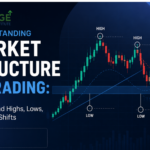

If you have started exploring the stock market, you have probably come across the term “price action trading” more than once. It sounds technical, but the idea behind it is refreshingly simple. This guide breaks down what price action trading really means, how beginners can approach it, and what government rules govern the Indian stock market so you can learn with confidence.
What Is Price Action Trading?
Price action trading is a method of analyzing a stock, index, or currency purely by studying its price movement on a chart, rather than relying on lagging indicators or news headlines. Traders who follow this approach study candlestick patterns, trend lines, and support and resistance zones to understand market sentiment and structure.
In simple words, price action trading is about reading what the price itself is telling you. Every candle on a chart reflects the collective decisions of buyers and sellers at that moment. Learning to interpret this “language” of the market is the foundation of price action analysis.
Why Beginners Prefer Price Action Trading
Many new traders gravitate toward price action trading because it teaches a structured, probability-based way of thinking rather than promising shortcuts. It encourages you to:
- Understand market structure — how trends form, pause, and reverse
- Identify key support and resistance levels where buying or selling pressure often increases
- Recognize common candlestick formations and what they may indicate about sentiment
- Build discipline through consistent chart study rather than chasing tips
It’s important to note that price action trading is a skill built over time through education and practice. It is not a guaranteed formula for profits, and no legitimate stock market course should claim otherwise. The market carries risk, and every trader must study, backtest, and practice responsibly before applying any strategy with real capital.
Core Building Blocks of Price Action
1. Candlestick Patterns: Each candle shows the opening, closing, high, and low price for a given period, giving clues about buyer-seller behavior.
2. Support and Resistance: These are price zones where the market has historically reacted, often used as reference points for structure-based analysis.
3. Trend Identification: Recognizing whether the market is trending upward, downward, or moving sideways helps traders contextualize price behavior.
4. Volume Confirmation: Studying volume alongside price adds another layer of context to any move on the chart.
Share Market Rules Set by the Government of India
Before you start learning or trading, it’s essential to understand that the Indian stock market operates under a well-defined regulatory framework designed to protect investors.
- SEBI (Securities and Exchange Board of India) is the primary regulator overseeing stock exchanges, brokers, and listed companies to ensure transparency and fair practices.
- NSE and BSE, the two major exchanges, function under SEBI’s guidelines for trading, settlement, and disclosure.
- KYC and Demat Norms require every investor to complete identity verification and hold securities in dematerialized form through a registered depository participant.
- Insider Trading Regulations prohibit trading based on unpublished price-sensitive information.
- Investor Grievance Mechanisms, such as SCORES, allow investors to raise complaints against brokers or listed entities.
Learning within this regulated environment matters. A good stock market education program should always align with SEBI’s investor awareness guidelines and avoid promising assured returns, since the securities market is inherently subject to risk.
Learning Price Action the Right Way
Price action trading is best learned through structured education that combines chart reading, market psychology, and risk awareness — not through shortcuts or guaranteed-profit claims. A well-designed course should help you build a logical, rules-based approach to reading markets, so you can make informed decisions independently over time.
If you’re based in Jaipur or prefer learning online, Capedge Educare offers structured, beginner-friendly stock market education that focuses on building this kind of disciplined, probability-based understanding of price action and market structure.
Price action trading offers a practical, structured way to understand market movement by focusing on what the chart itself reveals. As a beginner, the goal isn’t to find a shortcut to profits, but to build a genuine, disciplined understanding of how markets behave — always within the regulatory framework set by SEBI and the exchanges.